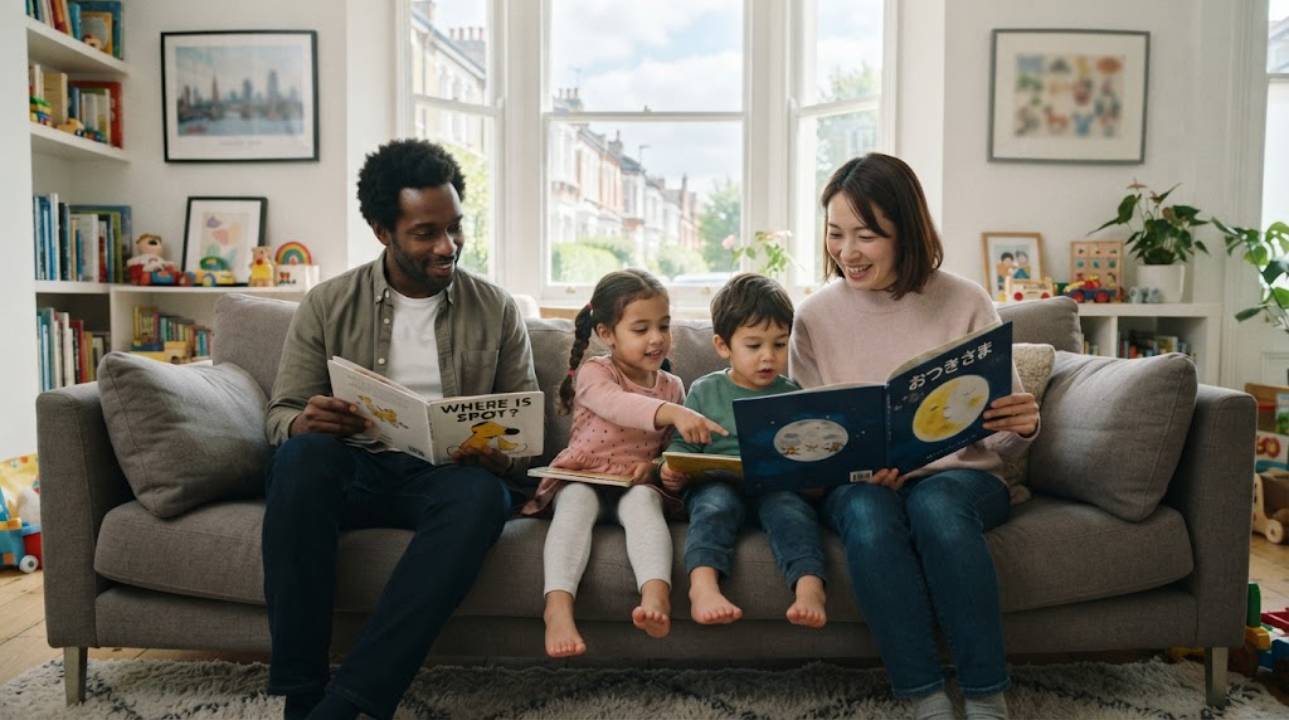
Moving to a new country is a big adventure for any family, and for children it often means learning a new language almost overnight. Within months, many young children speak the language of their new school with confidence, while parents are still struggling with basic conversations. At the same time, families want their children to keep the language spoken at home, the language of grandparents, family traditions and identity. Balancing the two is one of the most common challenges for internationally mobile families.
The good news is that children are remarkably capable of growing up with two or more languages. With some planning and consistency, families can help their children become confidently bilingual.
Bilingualism is an advantage
Research on multilingualism shows that children who grow up with more than one language often develop strong communication skills, flexibility in thinking and a greater awareness of how language works. Worries that learning two languages will confuse children or delay their development are generally unfounded. Some bilingual children mix languages or take a little longer to reach certain milestones in each language, but this is a normal part of the process and usually resolves naturally.
Keep the home language strong
Once children start school in the new country, the school language quickly becomes dominant. Friends, teachers, television and games all use it. Without active support, the home language can fade within a few years, sometimes to the point where children understand their parents but reply only in the new language. To prevent this, many families follow simple principles:
- Speak the home language consistently at home, even when children answer in the other language.
- Read books, sing songs and tell stories in the home language every day.
- Arrange regular video calls with grandparents and relatives.
- Look for weekend schools, playgroups or community activities in the home language.
- Spend holidays in the home country when possible.
Support the new language without replacing the old
Parents sometimes feel they should switch to the new language at home to help their children at school. In most cases, this is not necessary and can even be counterproductive, especially if the parents are not yet fluent. Children learn the school language best from teachers and classmates, while parents provide rich, natural input in the language they know best. What matters most is lots of conversation, reading and play, in whichever language comes naturally.
Families who arrived under difficult circumstances
Not every move is planned. Many families from Ukraine, for example, arrived in the United Kingdom and other countries suddenly, with children who had to adapt to a new school system in English while coping with the stress of displacement. For these families, keeping Ukrainian alive at home is also about continuity and identity. At the same time, schools, doctors and local authorities need to understand the children's background. Professional Ukrainian to English translation of school reports, medical records and birth certificates helps teachers and professionals place children in the right class and provide the right support.
School records and documents
Every international move involves paperwork. Schools may ask for previous reports, vaccination records and proof of age. Universities and exam boards may require certified translations of diplomas. Families moving from France or French-speaking countries often need French translation services for school reports and certificates, so that teachers understand grading systems that differ significantly from the British or American model. Having these documents translated early avoids delays in school placement.
Everyday help with technology
In daily life, technology can be a useful support. A good Translation tool helps parents understand school newsletters, homework instructions and messages from teachers while they are still learning the new language. It is not a replacement for professional translation of official documents, but it makes day-to-day communication easier and helps parents stay involved in their children's education.
Dealing with resistance
Many bilingual families go through phases when children refuse to speak the home language. They may feel embarrassed in front of friends or simply find the school language easier. Pressure rarely helps. Instead, parents can make the home language fun and relevant: films, games, cooking, music, visits from relatives and friendships with other bilingual children. Showing genuine pride in the family's languages sends a strong message.
When to seek advice
If parents are worried about their child's language development, for instance if a child speaks very little in either language, it is worth consulting a speech and language therapist who has experience with bilingual children. Assessment should consider both languages, since a child may be developing normally overall even if one language is weaker.
A lifelong gift
Raising bilingual children after a move abroad takes patience, but the rewards are lasting. Children who keep their home language while mastering a new one gain access to two cultures, stronger family bonds and valuable skills for the future. With consistency, encouragement and practical support, families can turn the challenge of moving into an opportunity for their children to grow up with more than one voice.